

Hey there! As a supplier of Plastic Beer Crate Moulds, I often get asked about the training required to operate these bad boys. So, I thought I'd sit down and share my thoughts on this topic.
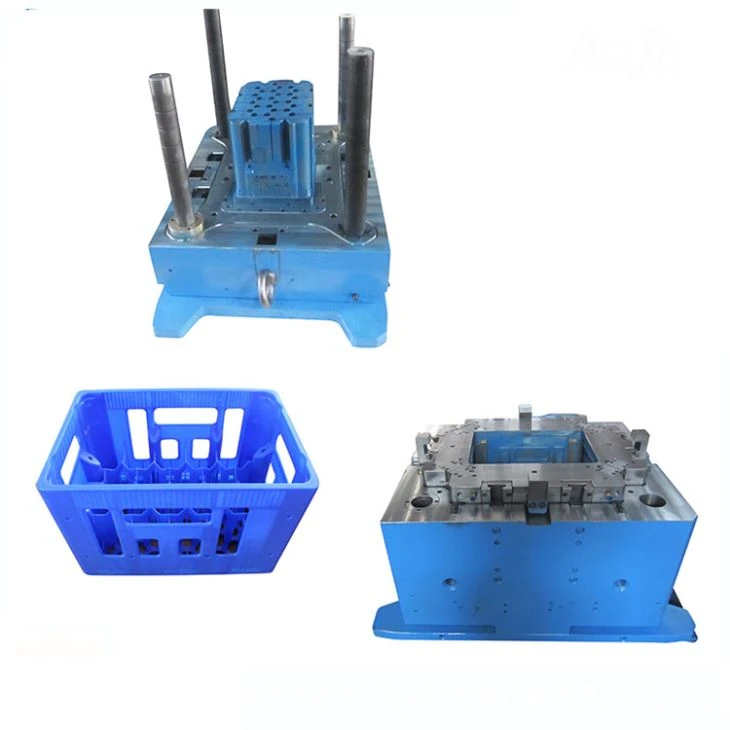
First off, let's talk about what a plastic beer crate mould actually is. It's a specialized tool used in the injection molding process to create plastic beer crates. The process involves melting plastic pellets and injecting them into the mould cavity under high pressure. Once the plastic cools and solidifies, the mould opens, and the finished beer crate is ejected.
Now, operating a plastic beer crate mould isn't exactly a walk in the park. It requires a combination of technical knowledge, practical skills, and a whole lot of attention to detail. Here are some of the key areas of training that are essential for anyone looking to operate these moulds effectively.
Technical Knowledge
One of the first things you need to understand is the injection molding process itself. This includes knowledge of the different types of plastics used, the melting and cooling characteristics of those plastics, and the principles of pressure and temperature control. You should also have a good grasp of how the mould is designed and how it functions. This involves understanding the different components of the mould, such as the cavity, core, ejector pins, and cooling channels.
For example, different plastics have different melting points and flow properties. Polypropylene, which is commonly used for beer crates, has a relatively low melting point and good flow characteristics. This means that it can be easily injected into the mould cavity and will fill all the nooks and crannies to create a high - quality crate. On the other hand, if you use a plastic with poor flow properties, you might end up with a crate that has voids or incomplete sections.
Another important aspect of technical knowledge is understanding the control systems of the injection molding machine. Modern machines are highly automated and are controlled by sophisticated software. You need to know how to set up the machine parameters, such as the injection speed, pressure, and temperature, based on the type of plastic and the design of the mould.
Safety Training
Safety is always a top priority when operating any kind of industrial equipment, and plastic beer crate moulds are no exception. You need to be trained on how to safely operate the injection molding machine and handle the hot plastics. This includes wearing appropriate personal protective equipment (PPE), such as heat - resistant gloves, safety glasses, and protective clothing.
You also need to know how to safely open and close the mould, as well as how to handle any potential hazards, such as leaks or blockages. For instance, if there is a plastic leak from the machine, you need to know how to shut down the machine safely and clean up the mess without getting burned.
Practical Skills
In addition to technical knowledge and safety training, you also need to develop practical skills. This includes learning how to load and unload the mould from the injection molding machine. You need to be able to align the mould correctly and secure it in place to ensure that the injection process goes smoothly.
Another practical skill is setting up the mould for production. This involves installing the necessary inserts, such as labels or logos, and ensuring that all the components are properly lubricated and in good working condition. You also need to be able to troubleshoot any problems that may arise during the production process, such as stuck ejector pins or uneven cooling.
For example, if the ejector pins get stuck, you need to know how to disassemble the relevant parts of the mould carefully and clean or repair the pins. If the cooling is uneven, you might need to adjust the cooling channels or the flow rate of the cooling water.
Quality Control
Quality control is an integral part of operating a plastic beer crate mould. You need to know how to inspect the finished crates for defects, such as cracks, warping, or surface imperfections. This involves using various inspection tools, such as calipers, gauges, and visual inspection techniques.

You should also be familiar with the quality standards for plastic beer crates. These standards may vary depending on the market and the customer requirements. For example, some customers may require a certain level of strength and durability for the crates, while others may focus more on the aesthetic appearance.
Continuous Learning
The field of injection molding is constantly evolving, with new materials, technologies, and techniques being developed all the time. As an operator of a plastic beer crate mould, you need to be committed to continuous learning. This could involve attending industry seminars, reading technical publications, or participating in on - the - job training programs.
For example, new types of plastics are being developed that are more environmentally friendly and have better performance characteristics. By staying up - to - date with these developments, you can improve the quality of the beer crates you produce and stay competitive in the market.
Resources for Further Learning
If you're interested in learning more about plastic crate moulds, there are some great resources available. You can check out our Plastic Liquid Milk Crate Moulds page, which gives you an idea of the different types of crate moulds we offer. Our Hot Sell Plastic Crate Injection Mold page showcases some of our popular products. And if you want to know more about thermoplastic injection molds for crates, head over to our Plastic Crate Thermoplastic Injection Mold page.
Conclusion
Operating a plastic beer crate mould requires a comprehensive set of skills and knowledge. From understanding the injection molding process and safety procedures to developing practical skills and ensuring quality control, there's a lot to learn. But with the right training and a commitment to continuous improvement, you can become a proficient operator.
If you're in the market for high - quality plastic beer crate moulds or have any questions about the training required to operate them, don't hesitate to reach out. We're here to help you every step of the way, whether you're just starting out or looking to upgrade your existing equipment. Let's have a chat and see how we can work together to meet your production needs.
References
- "Injection Molding Handbook" by O. John H. Isayev
- "Plastics Processing Technology" by Charles A. Harper