

Hey there, if you’re in the market for a plastic big crate mould—whether you’re a crate manufacturer looking to level up your production, a logistics company needing more durable turnover boxes, or a business planning to launch a new line of reusable storage containers—you’ve probably realized this isn’t a one-size-fits-all deal. I’ve been working as a plastic big crate mould supplier for over a decade, and let me tell you, picking the wrong mould can waste thousands in materials, kill production timelines, and leave you with crates that break before they even hit a warehouse shelf.
First off, let’s break down what a plastic big crate mould actually does. It’s the tool that shapes molten thermoplastic into those large, stackable crates you see moving goods between factories, grocery stores, or farms. Skip the basic research here, and you’re setting yourself up for headaches. Let’s walk through the key factors to nail down, so you don’t end up with a mould that’s perfect on paper but useless for your specific needs.
First, figure out what your crate will actually be used for. Not all crates are the same, right? A crate for transporting raw meat is way different than one for storing fresh fruit, or even a general-purpose turnover box for electronics parts. If you’re in the food industry, for example, a regular crate mould won’t cut it—you need one that meets food safety standards, can resist moisture, and is easy to clean. That’s where a specialist like a Plastic Meat Crate Mould comes in. These are designed with smoother inner walls to prevent bacteria buildup, and reinforced edges to handle the weight of packaged meat without warping. On the flip side, fruit crates need to be lightweight enough for farmers to haul, but still sturdy enough to hold bushels without crushing the produce inside. A Plastic Fruit Crate Mould will often have vented sides too, so air circulates and keeps fruits fresh during transport. If you’re just making standard storage turnover boxes for non-food items, maybe a general Plastic Crate Injection Molding Service Moulds Manufacturer Storage Turnover Box Recyclable Container would work, but don’t sleep on the purpose—this is your first non-negotiable step.
Next up, material choice for the mould itself and the final crate. Wait, two materials: the mould’s steel, and the plastic you’ll inject into it. For the mould, if you’re planning to run high-volume production (like 100,000+ crates a year), you need a mould made from P20 or H13 steel. P20 is affordable, easy to machine, and works great for medium runs. H13 is tougher, heat-resistant, and lasts longer if you’re doing daily, heavy-duty cycles. If you’re only doing small-batch runs, you could go with S50C steel, but keep in mind it’s less durable—you’ll have to replace it sooner, which ends up costing more in the long run.
As for the plastic material for your crates, most people use HDPE (High-Density Polyethylene) because it’s flexible, impact-resistant, and recyclable. If you need crates that can handle extreme temps (like being stored in a cold warehouse or exposed to direct sunlight), HDPE is still a solid pick, but some suppliers offer a modified version that adds UV stabilizers. For heavy-duty crates that need to carry pallets full of goods, maybe PP (Polypropylene) with glass fiber reinforcement is better—it’s stiffer and won’t bend under heavy loads. Make sure your mould is compatible with the plastic you choose; that’s why a Plastic Crate Thermoplastic Injection Mold is key here, since thermoplastics are the most common for crates.
Then there’s production capacity and mould design specifics. How many crates do you need to make per hour? That’ll determine the number of cavities in the mould. A single-cavity mould makes one crate per cycle, which is fine for small runs, but for big production, a multi-cavity mould (like 4, 8, or even 16 cavities) cuts down cycle time drastically. But here’s the catch: more cavities mean more complex mould design, so you’ll need to make sure the cooling system is set up right. If the cooling is uneven, some crates will cool faster than others, leading to warping or inconsistent dimensions.
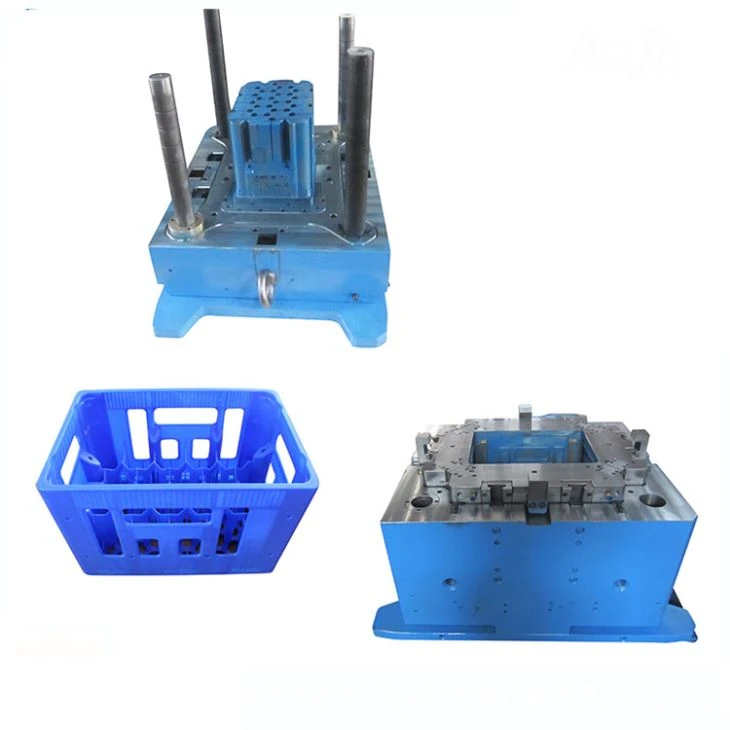
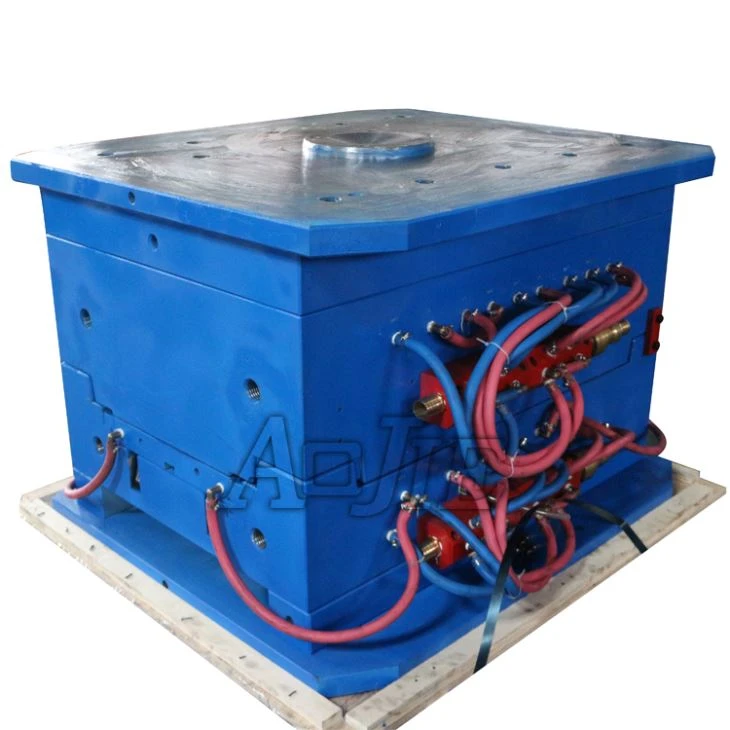
Also, think about the features of your crate. Do you need it to stack? If yes, the mould needs to have the right ribs on the bottom so crates lock into each other without sliding. Do you need it to nest when empty, to save storage space? That’s another design detail the mould has to nail—nested crates are a huge space-saver for logistics companies, so if that’s your end product, don’t skip asking about nesting capabilities. And don’t forget about gate design: the gate is where the molten plastic enters the mould, and for big crates, a side gate or edge gate works best to prevent sink marks on the inner walls. A good mould supplier will walk you through all this, but you should come to the table with a clear idea of your crate’s must-have features.
Budget is obviously a factor, but let’s be real—cheap isn’t always better. I’ve seen too many people go for a low-priced mould only to have it break after a few thousand cycles, leaving them with downtime and replacement costs that add up way more than a quality mould would’ve. That said, you don’t have to blow your entire budget either. If you plan for medium-volume production, a Hot Sell Plastic Crate Injection Mold often strikes a balance: it’s made with durable steel, has a standard cavity count that works for most production needs, and is priced fairly because it’s a popular, tested design. Just make sure the supplier isn’t cutting corners on machining—look for moulds that are CNC-machined, not hand-finished, because hand-finished moulds have inconsistent dimensions, which leads to bad crates.
Another big one: supplier reliability and after-sales support. Choosing a mould supplier isn’t just about buying a tool—it’s about having someone to call if the mould needs repairs, or if you need to adjust the design down the line. A good supplier will offer mould testing before shipment, so you can see a sample crate before they deliver it. They’ll also provide maintenance tips, like how to clean the mould to extend its life, and be on hand if you run into issues during the first few production runs. Avoid suppliers that ghost you once they’ve got your money—ask for references, check if they’ve worked with other companies in your industry, and make sure their customer support is responsive.
Wait, let’s throw in a common mistake I see all the time: not considering future needs. If you’re planning to scale up your production in a year or two, don’t buy a mould that’s only good for 5,000 crates. Invest in a mould that can handle higher cavity counts later, or one that’s compatible with the plastic you might switch to. It’s way cheaper to tweak an existing mould than to buy a whole new one when demand spikes.
Let me wrap this up: choosing the right plastic big crate mould boils down to matching your mould to your crate’s purpose, knowing your production volume, picking the right materials, checking the design details, and going with a supplier who’s in it for the long haul. Skipping any of these steps will almost definitely lead to headaches down the road.
If you’re still not sure where to start, or you want to talk through your specific needs—whether you’re making meat crates, fruit crates, general turnover boxes, or something else entirely—reach out. I’ve helped dozens of clients pick moulds that fit their exact needs, and I’m happy to walk you through the process without the sales pitch. Don’t waste time and money on a mould that doesn’t work for you—let’s find the right one together.
References
- American Injection Molding Association. (2022. Best Practices for Industrial Mould Design and Material Compatibility.
- Food and Drug Administration. (2021. Food-Safe Plastic Mould Standards for Food Packaging Containers.
- Logistics Management Magazine. (2023. Trends in Reusable Plastic Crate Design for Supply Chain Efficiency.