

Hey there, fellow motorcycle enthusiasts and industry peeps! I'm a supplier of Motorcycle Plastic Moulds, and today, I wanna talk about one crucial aspect of making those top - notch motorcycle plastic parts: the injection temperature requirement for motorcycle plastic moulds.
Let's start by understanding why injection temperature matters so much. When we're using Plastic Injection Mold For Motorcycle Parts, the temperature at which we inject the plastic into the mould plays a big role in determining the quality, strength, and overall appearance of the final product.
First off, different types of plastics have different optimal injection temperatures. For example, polypropylene (PP), which is commonly used in motorcycle parts like fenders and body panels, usually has an injection temperature range of around 200 - 260°C. If the temperature is too low, the plastic won't flow properly into all the nooks and crannies of the mould. This can lead to incomplete filling, resulting in parts with thin spots or even air bubbles. On the flip side, if the temperature is too high, the plastic can degrade. This means that the mechanical properties of the part, like its strength and durability, will be compromised.
ABS (acrylonitrile butadiene styrene) is another popular plastic in the motorcycle industry. It's often used for creating more rigid and impact - resistant components. The ideal injection temperature for ABS is typically between 220 - 260°C. When working with Plastic Injection Motorcycle Fender Mould using ABS, getting this temperature right is super important. A fender needs to be tough enough to withstand small impacts on the road, and the correct injection temperature helps ensure that the ABS forms a strong and uniform structure.
Now, when it comes to Scooter Parts Injection Plastic Mould, we also have to consider the type of scooter parts we're making. Some parts might be more complex in shape, and that can affect the injection temperature requirements. For example, if a scooter part has a lot of intricate details, we might need to increase the injection temperature slightly to make sure the plastic can flow smoothly into those small areas. However, we also have to be careful not to overdo it. Higher temperatures can increase the cycle time of the injection molding process, which means it takes longer to produce each part. And in a business where time is money, that's something we don't want.
Another factor that affects the injection temperature is the mould design itself. A well - designed mould will have proper heating and cooling channels. These channels help maintain a consistent temperature throughout the injection process. For instance, in a Motorcycle Rear Carrier Mould, if the cooling channels are not evenly distributed, it can cause uneven cooling of the plastic. This can result in warping or deformation of the rear carrier once it's ejected from the mould. So, the temperature not only needs to be right during injection but also during the cooling phase.
Let's talk about the impact of temperature on the finish of the motorcycle parts. When we're using a Motorcycle Body Part Mould, the surface finish is crucial. A smooth and shiny finish not only looks good but also indicates a well - made part. If the injection temperature is off, the surface of the body part might end up with rough spots or a dull appearance. This is because improper temperature can cause the plastic to solidify unevenly, affecting the surface quality.
We also need to think about the production volume. If we're making a large number of motorcycle parts, maintaining a consistent injection temperature becomes even more critical. Fluctuations in temperature can lead to inconsistent part quality. And when you're supplying parts to a motorcycle manufacturer, consistency is key. They need parts that fit together perfectly every time, and that's only possible when the injection temperature is well - controlled.
In addition to the plastic type, mould design, and production volume, environmental factors can also have an impact. For example, if the injection molding workshop is very hot or cold, it can affect the starting temperature of the plastic and the mould itself. In a hot environment, the plastic might already be at a higher temperature before entering the mould, which means we might need to adjust the injection temperature settings accordingly.

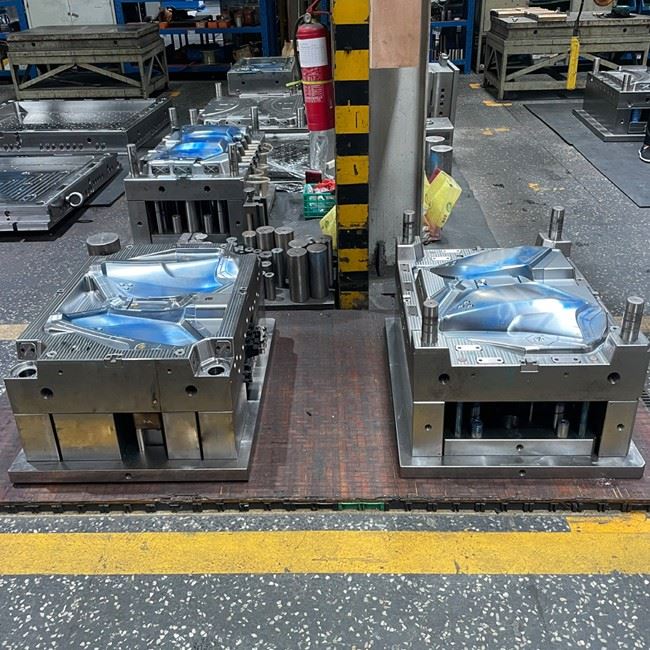
As a Motorcycle Plastic Mould supplier, I've seen firsthand how getting the injection temperature right can make or break a product. We use state - of - the - art equipment to monitor and control the injection temperature precisely. Our team of experts is constantly on the lookout for any changes in the process that could affect the temperature, and we're always ready to make adjustments.
If you're in the market for high - quality motorcycle plastic moulds, we'd love to chat with you. Whether you're a motorcycle manufacturer looking to produce custom parts or a distributor in need of reliable moulds, we've got the experience and the know - how to meet your needs. We can work with you to determine the optimal injection temperature for your specific plastic and mould requirements.
So, if you're interested in starting a partnership or just want to learn more about our products, don't hesitate to reach out. Let's work together to create the best motorcycle plastic parts in the industry.
References
- "Plastic Injection Molding Handbook"
- "Motorcycle Component Manufacturing Best Practices"
- Industry research reports on plastic usage in motorcycle manufacturing