

In the realm of plastic pallet manufacturing, the injection speed of a plastic pallet mould is a critical factor that significantly influences the quality, efficiency, and cost - effectiveness of the production process. As a seasoned Plastic Pallet Mould supplier, I've witnessed firsthand how the right injection speed can make or break a production run.
Understanding Injection Speed
Injection speed refers to the rate at which molten plastic is forced into the mould cavity during the injection moulding process. It is typically measured in millimeters per second (mm/s) and plays a vital role in determining the final properties of the plastic pallet.
A high injection speed can lead to several advantages. Firstly, it allows the molten plastic to fill the large and complex cavities of a plastic pallet mould quickly. Plastic pallets often have intricate designs with multiple ribs, pockets, and channels. A fast injection speed ensures that the plastic reaches all corners of the mould before it starts to cool and solidify, reducing the risk of short - shots (incomplete filling of the mould).
Secondly, high injection speed can enhance the surface finish of the plastic pallet. When the plastic flows rapidly into the mould, it can better conform to the surface details of the mould, resulting in a smoother and more aesthetically pleasing product. This is particularly important for pallets that are used in applications where appearance matters, such as in the retail or food industries.
However, high injection speed also has its drawbacks. It can generate high shear stress on the molten plastic, which may cause molecular orientation and degradation of the plastic material. This can lead to reduced mechanical properties, such as lower strength and impact resistance, in the final pallet. Additionally, high injection speed can increase the likelihood of air traps and weld lines in the pallet, which can weaken the structure.
On the other hand, a low injection speed has its own set of characteristics. It reduces the shear stress on the plastic, minimizing the risk of material degradation. This can result in a pallet with more uniform mechanical properties. But a low injection speed may cause the plastic to cool too quickly before fully filling the mould, leading to incomplete parts and a higher scrap rate.
Factors Affecting the Required Injection Speed
Several factors determine the optimal injection speed for a plastic pallet mould.
1. Mould Design
The complexity of the mould design is a major factor. For instance, a Heavy Plastic Pallet Mould with thick walls and large cavities may require a relatively high injection speed to ensure complete filling. In contrast, a more delicate Plastic Double - deck Pallet Mould with thin walls and fine details may need a lower injection speed to avoid damaging the mould or causing excessive shear stress on the plastic.
The size of the gate in the mould also plays a crucial role. A larger gate allows for a higher flow rate of the molten plastic, which may enable a lower injection speed to achieve the same filling time. Conversely, a smaller gate restricts the flow, often requiring a higher injection speed to fill the mould in a timely manner.
2. Plastic Material
Different plastic materials have different flow characteristics. For example, polypropylene (PP), which is commonly used in plastic pallet manufacturing, has relatively good flowability. It can often be injected at a moderate to high speed without significant issues. On the other hand, high - density polyethylene (HDPE) may require a different injection speed due to its different viscosity and melting point. Materials with higher viscosity generally need a higher injection speed to ensure proper filling of the mould.
3. Machine Capability
The injection moulding machine itself also affects the injection speed. The maximum injection speed that a machine can achieve is determined by its hydraulic system, screw design, and motor power. A machine with a higher maximum injection speed provides more flexibility in adjusting the speed according to the requirements of the plastic pallet mould. However, it's important to note that running the machine at its maximum speed continuously may lead to premature wear and tear of the machine components.
Determining the Optimal Injection Speed
Finding the optimal injection speed for a plastic pallet mould is often a process of trial and error. It typically starts with theoretical calculations based on the mould design, plastic material properties, and machine capabilities. Then, a series of test runs are conducted, and the results are carefully analyzed.
During the test runs, the injection speed is gradually adjusted while monitoring the filling time, part quality, and any defects that may occur. For example, if short - shots are observed, the injection speed may need to be increased. If there are signs of material degradation or excessive shear stress, such as brittleness or discoloration in the pallet, the injection speed may need to be reduced.
It's also beneficial to use simulation software. Many advanced simulation tools can predict the flow behavior of the molten plastic in the mould at different injection speeds. These simulations can provide valuable insights into the potential issues and help in optimizing the injection speed before actual production.
Impact on Production Efficiency and Cost
The injection speed has a direct impact on production efficiency and cost. A well - optimized injection speed can reduce the cycle time of the injection moulding process. By filling the mould quickly and efficiently, the time required for each pallet production can be shortened, allowing for a higher output per unit of time. This can significantly increase the overall productivity of the manufacturing facility.
In terms of cost, the right injection speed can reduce the scrap rate. As mentioned earlier, an inappropriate injection speed can lead to defective pallets, which need to be discarded. By minimizing the number of defective parts, the cost of raw materials and production time can be saved. Additionally, a lower scrap rate means less waste, which is also beneficial from an environmental perspective.
Case Studies
Let's take a look at some real - world examples. A customer who ordered a Big Tray Mould Plastic Injection Molding initially experienced issues with incomplete filling of the tray. After a series of tests, we found that increasing the injection speed from 80 mm/s to 120 mm/s solved the problem. The trays were then produced with a complete fill and a smooth surface finish, meeting the customer's quality requirements.
In another case, a manufacturer of plastic double - deck pallets was facing problems with weak weld lines in the pallets. By reducing the injection speed from 150 mm/s to 100 mm/s, the shear stress on the plastic was reduced, and the weld lines became stronger, improving the overall mechanical properties of the pallets.
Conclusion
Determining the injection speed required for a plastic pallet mould is a complex but crucial task. It involves a careful balance between the advantages and disadvantages of high and low injection speeds, taking into account factors such as mould design, plastic material, and machine capability. As a Plastic Pallet Mould supplier, we have the expertise and experience to help our customers find the optimal injection speed for their specific moulds.

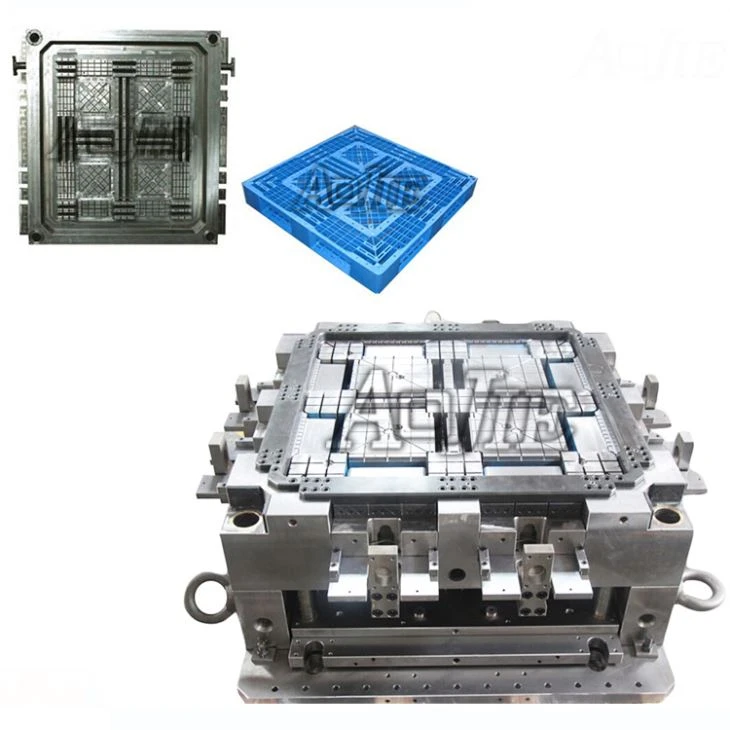
If you are in the market for high - quality plastic pallet moulds or need advice on injection speed optimization, we are here to assist you. Contact us to discuss your requirements and start a successful partnership in plastic pallet manufacturing.
References
- "Injection Molding Handbook" by O. Osswald and T. Turng
- "Plastics Materials and Processing" by James F. Carley