

Controlling the shrinkage rate in a plastic table mould is a critical aspect of the plastic injection - molding process. As a seasoned plastic table mould supplier, I've encountered numerous challenges and found effective strategies to manage this issue. In this blog, I'll share some key insights on how to achieve better control over shrinkage rates in plastic table moulds.
Understanding Shrinkage in Plastic Moulding
Shrinkage in plastic molding occurs as the molten plastic cools and solidifies. Different plastics have different shrinkage rates, which are influenced by factors such as the polymer type, molding conditions, and part design. For plastic table moulds, excessive or uneven shrinkage can lead to various problems, including warping, dimensional inaccuracies, and poor surface finish of the final product.
There are two main types of shrinkage in plastic molding: thermal shrinkage and crystallization shrinkage. Thermal shrinkage happens as the plastic loses heat and returns to a solid state. Crystallization shrinkage occurs in semi - crystalline plastics when the polymer chains arrange themselves into a more ordered structure during cooling.
Selecting the Right Polymer
One of the first steps in controlling shrinkage is to choose the appropriate polymer for the plastic table. Different plastics have different shrinkage characteristics. For example, polypropylene (PP) has a relatively high shrinkage rate, while acrylonitrile butadiene styrene (ABS) has a lower one.
When selecting a polymer, you need to consider the final application of the plastic table. If high durability and chemical resistance are required, materials like polyethylene terephthalate (PET) can be a good choice. However, note that PET also has a significant shrinkage rate during cooling. On the other hand, if you're aiming for a more cost - effective solution and can tolerate a bit more shrinkage, polypropylene might be suitable.
Mould Design Considerations
The design of the plastic table mould plays a crucial role in controlling shrinkage. Here are some important aspects to consider:
Wall Thickness
Uniform wall thickness is essential to ensure even cooling and minimize shrinkage variations. In a plastic table, thick sections will cool more slowly than thin sections, leading to different shrinkage rates and potential warping. Design the table with a consistent wall thickness throughout. If there are areas where different thicknesses are unavoidable, use gradual transitions.
Gate Design
The gate is the entry point for the molten plastic into the mould cavity. The size, shape, and location of the gate can significantly affect the flow of plastic and shrinkage. A well - designed gate allows for smooth plastic flow and even filling of the mould cavity. For example, a direct gate can provide a high - pressure injection, which helps in reducing shrinkage by packing the plastic tightly. However, it may also leave a visible mark on the final product. On the other hand, a pin - point gate can be used for a more aesthetic finish but may require careful adjustment to ensure proper filling.
Cooling Channels
Effective cooling is essential to control shrinkage. The design of the cooling channels in the mould should ensure uniform heat removal from the plastic. Place the cooling channels close to the critical areas of the table mould, such as the edges and corners. Moreover, the cooling channels should have a proper layout to avoid creating hot spots or cold spots. For instance, using a spiral - shaped cooling channel can provide more uniform cooling compared to a simple straight - line channel.
Molding Process Optimization
The molding process parameters also have a significant impact on the shrinkage rate. Here are some key parameters to optimize:
Injection Temperature
The injection temperature affects the viscosity of the molten plastic. A higher injection temperature generally results in lower viscosity, which allows the plastic to flow more easily into the mould cavity. However, if the temperature is too high, it can cause excessive shrinkage during cooling. On the other hand, a lower injection temperature can increase the viscosity, leading to incomplete filling of the mould. You need to find the optimal injection temperature for the specific polymer used in the plastic table.
Injection Pressure
Injection pressure is crucial for filling the mould cavity completely and packing the plastic tightly. Higher injection pressure can reduce the shrinkage rate by forcing more plastic into the cavity and compensating for the shrinkage during cooling. However, excessive pressure can also cause problems such as flash (plastic overflow) or damage to the mould. Therefore, an appropriate injection pressure should be determined based on the mould design and the polymer properties.
Cooling Time
The cooling time of the plastic in the mould is directly related to shrinkage. Allowing sufficient cooling time ensures that the plastic has solidified properly and reduces the chances of post - molding shrinkage. However, too long of a cooling time can reduce the production efficiency. You need to strike a balance between cooling time and production speed.
Post - Molding Treatments
After the plastic table is ejected from the mould, post - molding treatments can also help in reducing shrinkage. One common method is annealing. Annealing involves heating the plastic part to a specific temperature below its melting point and then slowly cooling it. This process relieves internal stresses in the plastic and can reduce shrinkage and warping.
Another post - molding treatment is conditioning. Conditioning the plastic table in a controlled environment with specific temperature and humidity can help the plastic reach its equilibrium state and minimize further shrinkage.
Our Product Range
As a plastic table mould supplier, we offer a wide range of high - quality moulds. Our Plastic Adjustable Table Mould is designed to meet the needs of various adjustable table designs. The precision - engineered mould ensures minimal shrinkage and high - quality products.
Our Plastic Round Table Mould and Plastic Square Table Mould are crafted with advanced technology to guarantee uniform wall thickness and accurate dimensions. These moulds are optimized for different polymers, allowing for better control of shrinkage.
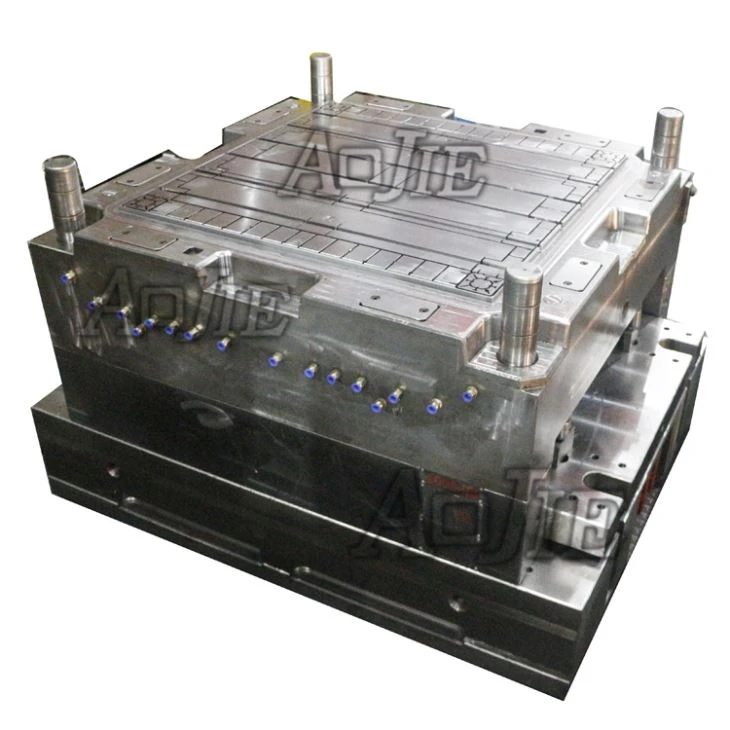

In addition, we also provide Plastic Table Leg Cover Plastic Injection Mould and Plastic Table Leg Connector Injection Mould. These specialized moulds are designed to produce high - quality table leg components with minimal shrinkage issues.
Conclusion
Controlling the shrinkage rate in a plastic table mould requires a comprehensive approach that involves choosing the right polymer, optimizing the mould design, fine - tuning the molding process, and implementing appropriate post - molding treatments. By following these strategies, you can produce high - quality plastic tables with accurate dimensions and excellent surface finish.
If you're interested in our plastic table moulds or have any questions about controlling shrinkage in the molding process, we encourage you to contact us for further discussion and potential purchasing. Our team of experts is ready to provide you with the best solutions for your plastic table manufacturing needs.
References
- Menges, G., Mohren, F., & Michaeli, W. (1999). Plastics Processing: An Introduction. Hanser Publishers.
- Rosato, D. V., & Rosato, D. V. (2001). Injection Molding Handbook. Van Nostrand Reinhold.
- Beaucamp, R. F. (1991). Injection Molding Practice. Chapman & Hall.